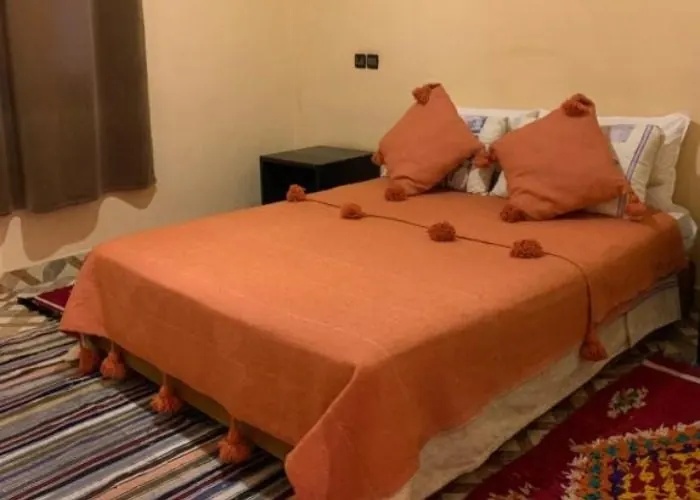
The Atlas Mountains in winter mean quiet valleys under big blue skies, snow-dusted peaks and evenings by the fire. From roughly December to February, days in Ouirgane are often sunny and mild, but nights turn cold, sometimes close to 0 °C. It is a lovely season for walking without the heat, enjoying the calm and admiring a snow-capped Toubkal, just 1 hr 15 from Marrakech.
Key facts
- Cold season: broadly December to February, with crisp mornings from November and into March
- Altitude: around 1,000 m in Ouirgane, versus 4,167 m at the summit of Toubkal
- Weather: often bright days, cold nights and occasional rainy spells
- Snow: mainly on the peaks, less often on the valley floor
- At the auberge: a fireplace in the garden-view family suite, slow-cooked home food, a pool kept for the warmer months
- Tizi n'Test road: can close temporarily after heavy snowfall
What is the weather like in the Atlas Mountains in winter?
Winter in the mountains often surprises visitors: they expect the cold and mostly discover the light. On a fine day it is pleasant in the sunshine around midday, and lunch outdoors in a jumper is perfectly possible. As soon as the sun drops behind the ridges, though, the temperature falls quickly, so bring proper warm layers for the evening and early morning.
Rainfall is irregular: some weeks are completely dry, while others bring rain in the valley and snow higher up. For season-by-season averages, see our article on Ouirgane weather and the best time to visit.
Where and when can you see snow in the Atlas?
Snow usually settles on the high summits from December and can linger into spring, sometimes longer on north-facing slopes. From the valley you can see the white ridges on clear days, a superb backdrop without having to face the cold up high. Higher villages such as Imlil, at about 1,740 m, see snow more often than Ouirgane. Further east, the Oukaïmeden ski area draws skiers from Marrakech in years when there is enough snow.
How do you stay warm at the auberge?
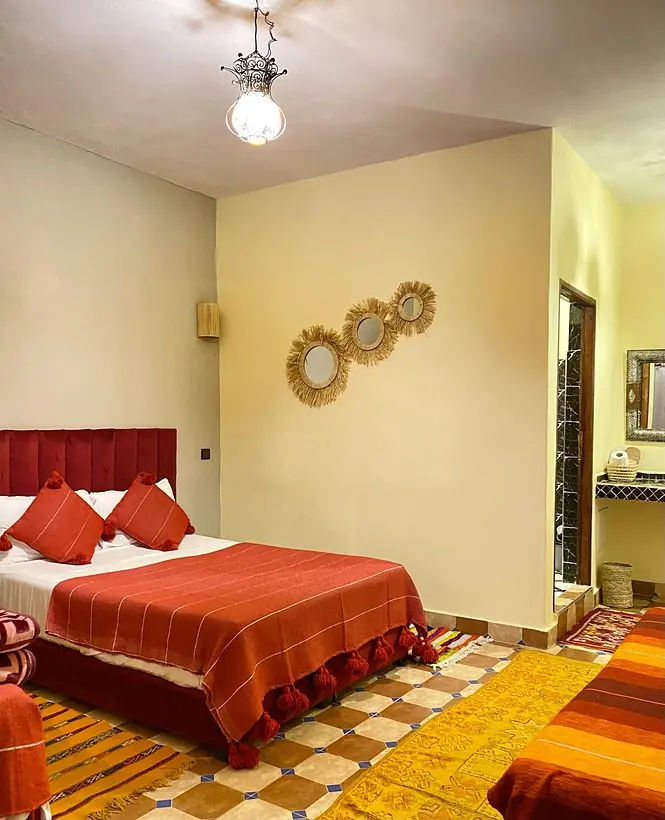
Our garden-view family suite (30 m², two bedrooms) has a fireplace and heating: nothing beats a log fire after a day on the trails. Every suite has a private bathroom, air conditioning and free Wi-Fi; to check how each suite is heated on your dates, just ask us. Take a look at our suites.
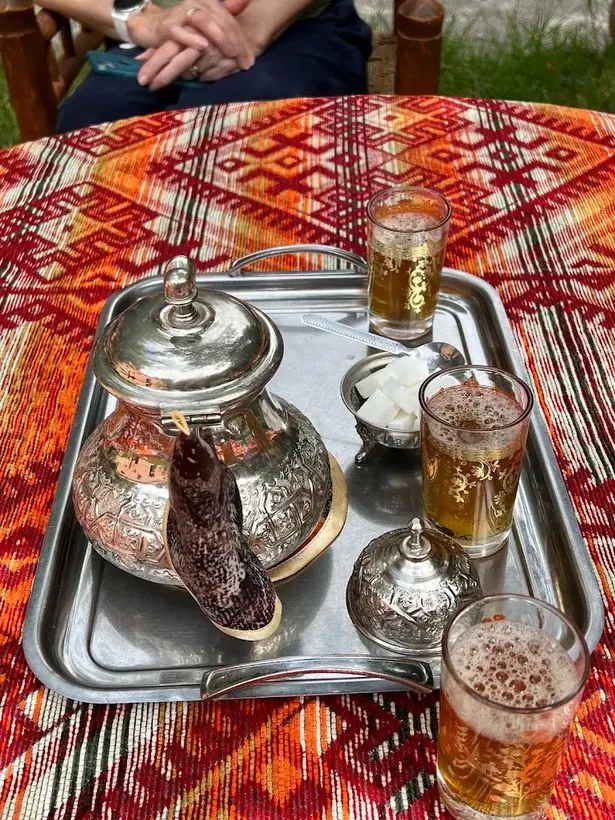
Winter is also the season for warming dishes. Rachida cooks slow-simmered tagines to order, and couscous on request. Mint tea, which Moroccans often flavour with wormwood (chiba) in winter, is the perfect way to end the day. Remember to book your meals in advance with our home-cooking restaurant.
Which walks can you do in winter around Ouirgane?
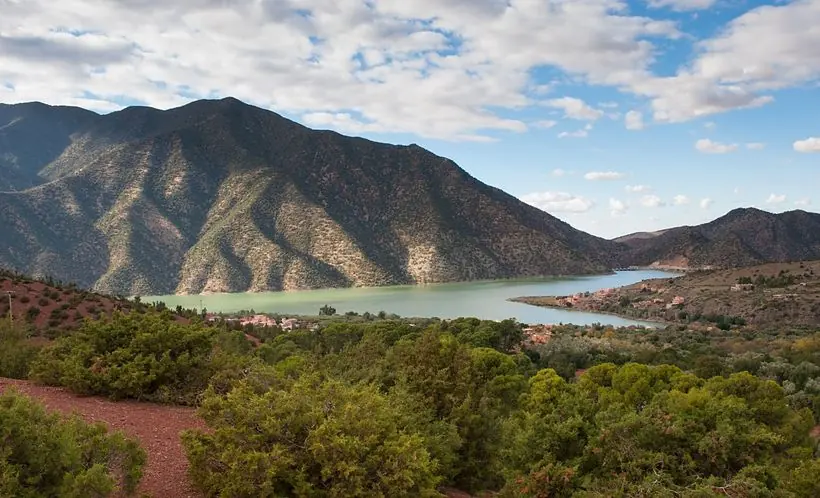
Winter is an excellent time for walking at lower altitude. Trails around the lake, between Berber villages and through holm oak and juniper woodland are usable almost all winter. With a local guide, we suggest you:
- set off mid-morning, once the frost has melted;
- get back before nightfall, which comes early in winter;
- avoid riverbeds after heavy rain;
- carry a hot drink and an extra layer.
The Saturday souk in Asni runs all year round, and a traditional hammam, which we can arrange, is perfect after a walk on a chilly day.
Can you climb Toubkal in winter?
Yes, but it becomes a different undertaking. With snow and ice, Toubkal turns into a winter mountaineering route: crampons and an ice axe are essential, days are short and conditions can deteriorate quickly. A qualified mountain guide is strongly recommended, and you should check the current rules before you go. To choose your window, read our article on the best time to climb Toubkal. Ouirgane, lower and milder, makes a restful base before or after the climb.
What should you pack for the Atlas in winter?
- A down jacket or thick fleece, plus a windproof, waterproof shell.
- A warm hat, gloves and thick socks for the evenings.
- Waterproof walking boots with ankle support.
- Sunglasses and sun cream, as the winter sun is still strong at altitude.
- A head torch and an insulated bottle.
For the full seasonal checklist, see our Toubkal packing list. Crampons and ice axes can often be hired in Imlil, but check with your guide.
What are mountain roads like in winter?
The road from Marrakech to Ouirgane via Asni is open most of the time. Further south, the Tizi n'Test pass can close for a few hours or days after heavy snow, and rockfalls are possible after storms. Check road conditions before setting off, drive in daylight and leave some slack in your plans.
Read next: Group retreat in the Atlas Mountains: book a whole auberge
Read next: where to stay in Ouirgane
Book your winter stay direct
Ready to discover the Atlas Mountains in winter, with sunshine, white peaks and a crackling fire? Book your suite directly on our website or message us on WhatsApp: no middleman and no online payment. Tell us your dates and we will give you honest advice on the weather and what to do at that time.
Frequently asked questions
Is it cold in the Atlas Mountains in winter?
Days are often mild and sunny, but nights can drop close to 0 °C, or below during cold snaps, especially higher up. Bring warm clothing for evenings and mornings, even if you end up lunching outside at midday.
Does it snow in Ouirgane?
At around 1,000 m, snow is fairly rare on the floor of the Ouirgane valley, although it can fall during cold spells. It regularly covers the nearby High Atlas summits, however, which you can see from the valley on clear days.
Can you swim in the auberge pool in winter?
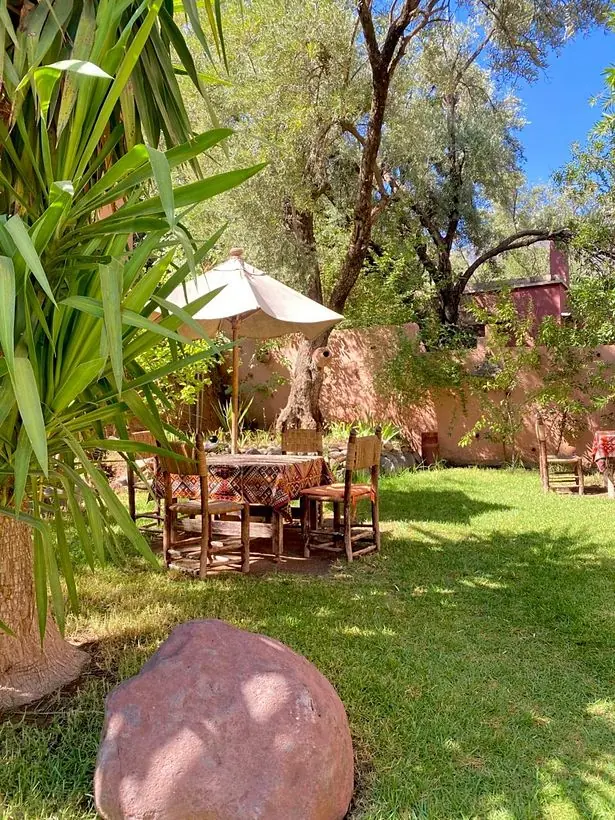
The pool at Auberge Le Mouflon is outdoors and is best enjoyed from spring to autumn. In winter the water is too cold for most people, who prefer the sunny terraces and the traditional hammam we arrange from the auberge.
Is the Tizi n'Test road open in winter?
It is generally open, but can close temporarily after heavy snowfall or rockfalls. Always check conditions the day before and on the morning of your journey, and drive in daylight.
Good tips from the High Atlas
One letter per season: hikes, Rachida’s recipes and early availability. No spam.